


Into the Wilderness: Remote Desert Expeditions That Inspire Awe
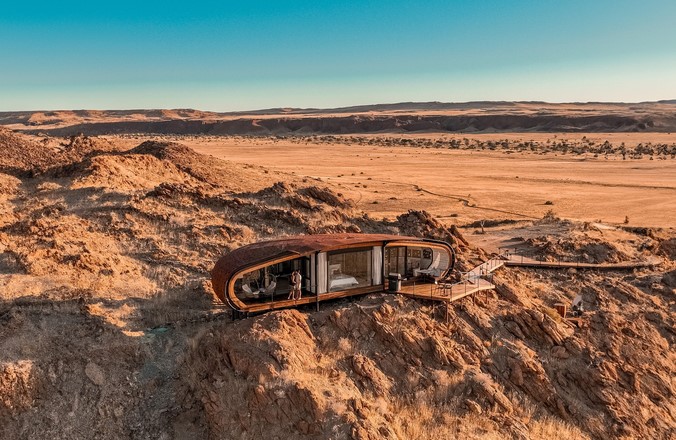
Source:https://cdn.conscious-explorer.com
Picture this: You are standing in the middle of the Atacama Desert at 2:00 AM. The temperature has plummeted from a daytime $95^\circ\text{F}\ (35^\circ\text{C})$ to a shivering sub-zero freeze. There isn’t a single bar of cell service for 150 miles, and the silence is so heavy you can hear the blood pulsing in your ears. You look up, and the Milky Way bursts across the sky with such blinding clarity that you don’t even need a headlamp to illuminate the sand beneath your boots.
That stark contrast between brutal isolation and pure, humbling beauty is why hyper-arid wilderness travel is so addictive.
Having spent over a decade guiding and executing multi-day off-grid crossings—from the wind-sculpted dunes of the Rub’ al Khali to the high-altitude salt flats of Bolivia—I can tell you that remote desert expeditions are the ultimate reset for the modern soul. However, surviving and enjoying these hyper-isolated environments takes far more than just packing a tent and extra water.
For beginner and intermediate adventurers, entering extreme desert wilderness demands respect, sharp technical preparation, and solid risk management. Let’s break down how to plan, equip, and execute an unforgettable journey into the world’s most breathtaking desert expanses.
Understanding Hyper-Arid Terrain: The Science of Survival
Before setting wheel or boot in the deep sands, you must understand the environment. Deserts are not just big piles of warm dirt; they are volatile thermal ecosystems driven by extreme microclimates and sharp solar mechanics.
Think of taking on remote desert expeditions like flying a spacecraft into deep orbit: you are bringing your entire life-support system with you into a realm that offers zero second chances if your gear or math fails.
+--------------------------+------------------------------------+------------------------------------+
| Expedition Metric        | Coastal / Semi-Arid Desert         | Deep Hyper-Arid Wilderness         |
+--------------------------+------------------------------------+------------------------------------+
| Diurnal Temp Variance    | Moderate ($20^\circ\text{F}$ shift)| Extreme ($50^\circ\text{F}+$ shift)|
| Water Availability       | Rare Oases / Coastal Dew           | Absolute Zero (Self-contained)     |
| Navigation Complexity    | Visible Landmarks / Coastlines     | Featureless Dunes / GPS-only       |
| Rescue Evacuation Window | 6 to 12 Hours                      | 24 to 48+ Hours                    |
+--------------------------+------------------------------------+------------------------------------+
The diurnal temperature shift—the dramatic swing between midday scorching heat and midnight freezing cold—catches almost every first-timer off guard. You need a dual-climate mindset when packing gear.
Top 3 Iconic Regions for Remote Desert Expeditions
If you are ready to venture far beyond standard tourist viewpoints, these three global destinations offer the ultimate blend of deep wilderness solitude, raw geology, and unforgettable landscapes:
                      [ GLOBAL DESERT EXPEDITIONS ]
                     /              |              \
             Atacama Desert    Empty Quarter     Uyuni & Altiplano
             (Chile)           (Oman/UAE)        (Bolivia)
1. The Atacama High Plateau – Chile
-
The Environment: The driest non-polar desert on Earth, sitting at an altitude of 8,000 to 13,000 feet above sea level.
-
The Experience: Salt lakes framed by smoking volcanoes, geyser fields steaming in sub-zero morning air, and the clearest night skies on the planet.
-
My Insight: High altitude combined with zero relative humidity accelerates dehydration at double the standard rate. You will dry out simply by breathing, even when you aren’t sweating!
2. The Rub’ al Khali (The Empty Quarter) – Oman & UAE
-
The Environment: The largest continuous sand sea on Earth, stretching over 250,000 square miles of towering red sand dunes.
-
The Experience: Navigating multi-tiered dune fields (barchans), camping in silent inter-dune basins, and experiencing traditional Bedouin wilderness navigation.
3. The Salar de Uyuni & Southern Altiplano – Bolivia
-
The Environment: High-altitude salt flats transitioning into colorful mineral lagoons and harsh volcanic deserts.
-
The Experience: Crossing thousands of square miles of blinding white salt crust, where horizon lines vanish into surreal optical illusions.
Technical Gear: What Protects You in the Deep Sands
When you are three days away from the nearest paved road, cheap gear becomes a liability. Equipping yourself for remote desert expeditions requires balancing sun protection, sand sealing, and thermal insulation.
[ UPF 50+ SOLAR HOODIE ] ➔ [ POLARIZED CAT 4 EYEWEAR ] ➔ [ HIGH-FLUX SAT MESSENGER ]
1. Vehicle & Navigation Rigging
If you are undertaking an overland 4×4 desert crossing:
-
Dual-Battery Systems & Solar Input: Extreme heat degrades vehicle batteries rapidly. Running an onboard portable fridge to preserve food and medicines requires a dedicated secondary deep-cycle lithium battery paired with solar panels.
-
Traction & Recovery Setup: Never enter deep sand without a heavy-duty air compressor (to reinflate tires after dropping to 12–15 PSI for sand flotation), a shovel, snatch straps, and high-impact recovery boards (such as MaxTrax).
-
Redundant Navigation: Relying solely on a smartphone app is a rookie mistake. Heat will force smartphones into thermal shut-down. Always carry a dedicated rugged GPS unit alongside physical topo maps and a magnetic sighting compass.
2. Personal Apparel System
-
Long-Sleeve Sun Shirts: Wear loose, light-colored UPF 50+ rated synthetic hooded shirts. They create a cooling micro-breeze against your skin while shielding you from UV radiation.
-
Dust & Wind Protection: High-wind sandstorms (shamals) can strike unexpectedly. Keep a seamless neck gaiter (buff) and sealed dust-goggles within arms reach at all times.
-
High-Loft Insulation for Nightfall: Pack a packable 800-fill down jacket and thermal base layers. Once the sun drops below the horizon, temperatures crash within minutes.
The Mathematics of Water & Electrolyte Management
Running out of water in the deep desert is a life-threatening emergency. During remote desert expeditions, water isn’t just for drinking—it is needed for food prep, basic hygiene, and vehicle radiator emergencies.
The 1-to-1 Hydration Rule: Calculate minimum water requirements at $5\text{ Liters}\ (1.3\text{ Gallons})$ per person, per day for basic survival, plus an additional $2\text{ Liters}$ per day safety margin for unexpected delays or mechanical breakdowns.
+-----------------------------------+------------------------------------+
| Daily Water Allocation Per Person | Volume Required                    |
+-----------------------------------+------------------------------------+
| Active Consumption (Drinking)     | 3.5 - 4.5 Liters (with Electrolytes)|
| Cooking & Food Prep               | 1.0 Liter                          |
| Emergency Reserves / Hygiene      | 1.5 - 2.0 Liters                   |
| Total Minimum Daily Carry         | 6.0 - 7.5 Liters / Person / Day    |
+-----------------------------------+------------------------------------+
Preventing Hyponatremia
Never drink massive quantities of plain water while sweating heavily in hot climates. You must replenish lost salts by adding balanced sodium-potassium electrolyte powders to your water. Without them, your body cannot absorb the fluids efficiently, leading to severe cramps, headaches, and dangerous disorientation.
Hidden Hazards: Expert Safety Checklist
True wilderness travel demands a proactive approach to risk management. Keep these expert warnings in mind:
🚨 Hidden Warning: Flash Floods & Thermal Shutdowns
3 Rules for Eco-Conscious Desert Exploration
Deserts look tough, but their crusts and ecosystems are remarkably fragile:
-
Protect Cryptobiotic Soil Crusts: In high desert environments (like the Colorado Plateau or Atacama), the dark topsoil is actually a living community of cyanobacteria, lichens, and mosses that takes decades to grow. Walking or driving off-trail crushes this delicate crust, leading to severe wind erosion. Always walk on established trails, rock faces, or dry wash beds.
-
Pack Out Human Waste: In hyper-arid climates, organic material and toilet paper do not decompose—they simply mummify in the dry air. Carry portable waste bag systems (WAG bags) and pack out everything you bring in.
-
Respect Wildlife Water Access: Water sources in deep deserts are vital for native wildlife (such as desert bighorn sheep, gazelles, and foxes). Never pitch your camp within 300 feet of an isolated waterhole or spring, as human presence will scare thirsty animals away.
Ready to Answer the Call of the Wild?
Embarking on remote desert expeditions pushes you past everyday noise, testing your self-reliance while rewarding you with vast landscapes, pristine night skies, and a profound sense of inner clarity.
When you prepare meticulously, respect the natural elements, and carry the right gear, the harsh wilderness transforms into one of the most inspiring, soul-stirring sanctuaries on Earth.
Over to You! Have you ever experienced the deep silence of a remote desert, or is an off-grid expedition sitting at the top of your adventure bucket list? Drop a comment below with your questions or favorite wilderness memories—let’s keep the expedition conversation going!