


Monthly Archives: May 2026
Northern Magic: Polar Cruises to Witness the Lights
Source:https://img.cruisecritic.net
You are standing on a vibrating steel deck in the middle of the Greenland Sea, the temperature has plummeted to -15°C, and your eyelashes are starting to frost over. Suddenly, a faint ghostly ribbon of lime-green tea-smoke begins to dance across the pitch-black sky, expanding into a violet-edged curtain that shimmers with the intensity of a thousand neon signs. Most travelers try to catch this from a hotel window, only to be thwarted by light pollution or a single stubborn cloud. But on the move, in the deep Arctic, the odds shift dramatically in your favor.
In my decade of navigating the world’s most frozen latitudes, I’ve learned that polar northern lights cruises are the ultimate “cheat code” for seeing the Aurora Borealis. While land-based hunters are stuck in one coordinate, a ship is a mobile observatory that can outrun localized weather systems. I still remember my first night off the coast of Svalbard; the captain made a sudden 10-degree course correction just to bypass a fog bank, revealing a sky so clear it felt like I could touch the stars. That is the tactical advantage of being at sea.
The Science of the Chase: Why the Ocean Wins
To understand why a cruise is superior, you have to understand the “Cloud Problem.” The Aurora happens 100km above the Earth, but clouds hang much lower. If you are on land and it’s cloudy, your night is over. On a ship, the captain uses real-time satellite imagery to find “holes” in the cloud cover.
Think of it like fishing in a massive lake. If you sit on the pier (land), you have to wait for the fish to come to you. If you are in a boat (cruise), you can drive to where the fish are biting. Polar northern lights cruises essentially turn a static waiting game into an active pursuit.
Understanding the KP-Index and Solar Cycles
When you’re on board, you’ll hear the expedition leaders talking about the KP-Index. This is a scale from 0 to 9 that measures geomagnetic activity.
-
KP 1-3: Quiet activity; you need to be far north (like the Arctic Circle) to see anything.
-
KP 5+: A geomagnetic storm; the lights can drop further south and become incredibly vibrant.
-
Solar Maximum: We are currently approaching a peak in the 11-year solar cycle, meaning the next few seasons will offer the most intense displays in over a decade.
Navigating the Technical Logistics of a Polar Voyage
Choosing the right ship is a technical decision that dictates your comfort and your success rate. For beginners and intermediate travelers, there are two main types of vessels to consider.
1. The Expedition Vessel (Ice-Class)
These are smaller, rugged ships built to crunch through “pancake ice” and reach remote fjords.
-
The Insight: These ships have a shallower draft, allowing them to get closer to the coast where the water is calmer—perfect for long-exposure photography.
-
The Technical Edge: Look for a ship with a PC6 Ice Class rating. This ensures the hull can handle the pressure of Arctic winter conditions safely.
2. The Luxury Coastal Express
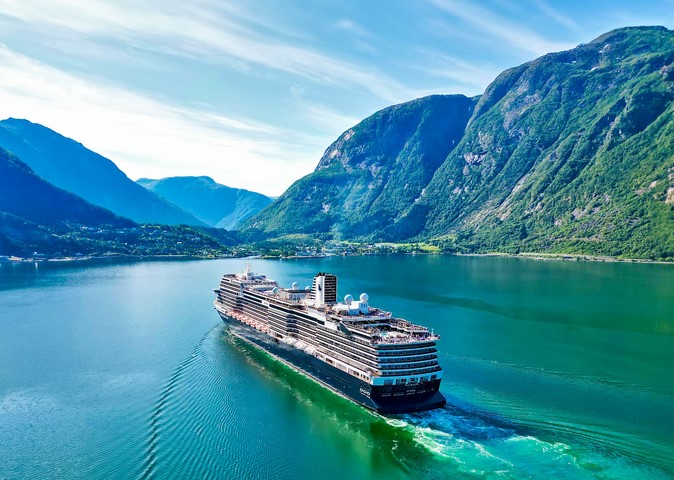
Larger ships, like those navigating the Norwegian coast, offer more stability and amenities.
-
Personal Observation: I’ve found that these ships are better for “Aurora Beginners” because they have dedicated Northern Lights Alarms in every cabin. You can sleep in a warm bed, and the ship will wake you up the second the sensors detect activity.
Technical Gear: How to Survive the Arctic Night
Standard winter gear won’t cut it when you are standing on a moving deck with a wind chill factor that can make -10°C feel like -25°C.
-
Vapor Management: You need a three-layer system. A moisture-wicking base (Merino wool), a heavy insulating mid-layer (down or thick fleece), and a Gore-Tex outer shell that is 100% windproof.
-
The “Tripod Tangle”: If you want to photograph the lights, a standard tripod on a moving ship is a challenge. You need a fast lens with a wide aperture (f/2.8 or lower) and a camera that handles High ISO without too much noise.
-
LSI Tip: Use Lithium-ion batteries. Standard alkaline batteries will die in minutes in the Arctic cold. Keep your spares inside your inner jacket pocket to keep them warm with your body heat.
Expert Advice: Tips for the High-Latitude Traveler
After years of “Aurora hunting,” I’ve developed a few professional secrets that you won’t find in the brochures.
Tips Pro: The “Aft-Deck” Secret
Most people crowd the bow (the front) of the ship when the lights appear. Don’t do that. The bow is the windiest and coldest part of the ship. Head to the Aft-Deck (the back). It’s usually shielded from the wind by the ship’s superstructure, and the vibration is often lower, which helps keep your camera steady for that perfect shot.
Beware of “Night Blindness.” If you spend time in the brightly lit lounge and then run outside, your eyes will take 20 minutes to adjust to the dark. You’ll miss the subtle “faint” starts of the Aurora. Always wear red-tinted glasses or hang out in the dimmest part of the deck to keep your scotopic vision (night vision) sharp.
Scannable Checklist for your Polar Cruise
-
Itinerary: Choose a “Round-trip” or a “Northbound” route. Staying above the 66th parallel (the Arctic Circle) for more than 5 nights gives you a 90% statistical chance of a sighting.
-
Footwear: You need “Baffin” style boots or specialized Arctic boots. Standard leather boots will freeze, and your toes will lose circulation within 30 minutes.
-
Optics: Bring 8×42 binoculars. While you can’t see the Aurora better with them, they are essential for spotting Whales and Polar Bears during the limited daylight hours.
-
Photography: Turn off your flash! It won’t reach the sky, and you will ruin the night vision of everyone on deck.
The Sustainable Impact of Polar Cruising
As an advocate for the environment, I must highlight that the Arctic is a “Sentinel” for climate change. Modern polar northern lights cruises are moving toward Hybrid-Electric Propulsion and strict “No-Waste” policies.
When you book, ask if the ship uses Marine Gas Oil (MGO) instead of Heavy Fuel Oil. MGO burns cleaner and reduces the “Black Carbon” deposits on Arctic ice, which helps slow down the melting process. Your choice of ship can be a vote for a cleaner Arctic.
Conclusion: The Ultimate Light Show
There is no experience on Earth quite like watching the sky catch fire while you are surrounded by the silence of the Arctic Ocean. Polar northern lights cruises take the guesswork out of the equation, providing you with a front-row seat to the greatest show in the universe.
It’s cold, it’s remote, and it requires a bit of technical preparation—but the moment those green ribbons start to swirl above the mast, you’ll realize that every bit of effort was worth it.
Have you ever felt the “Arctic pull,” or are you worried about the cold keeping you inside? If you could pick your Aurora companion—a professional photographer or a marine biologist—who would you want by your side on the deck? Let’s chat in the comments!
Above the Trees: Luxury Treehouse Escapes in Nature
Source:https://media.glampinghub.com
The floor beneath my feet hummed with a subtle, rhythmic vibration—not the mechanical thrum of an HVAC system, but the literal breathing of a century-old Banyan tree. I was twenty feet above the jungle floor in Bali, nursing a cup of local coffee as a troop of macaques used my “balcony” as a high-speed highway. At that moment, the $500-a-night price tag felt like a steal. While traditional luxury hotels fight to keep nature out with glass and concrete, luxury treehouse escapes invite the wilderness in, transforming a childhood dream into a sophisticated sanctuary.
In my decade of traversing the globe, I’ve seen the “Glamping” trend evolve from simple tents to architectural marvels suspended in the canopy. Yet, for many travelers, the idea of a treehouse still conjures images of splinters, mosquitoes, and questionable structural integrity. I’m here to tell you that the reality of modern arbor-architecture is far more “Ritz-Carlton” than “Swiss Family Robinson.”
The Engineering of a Canopy Sanctuary
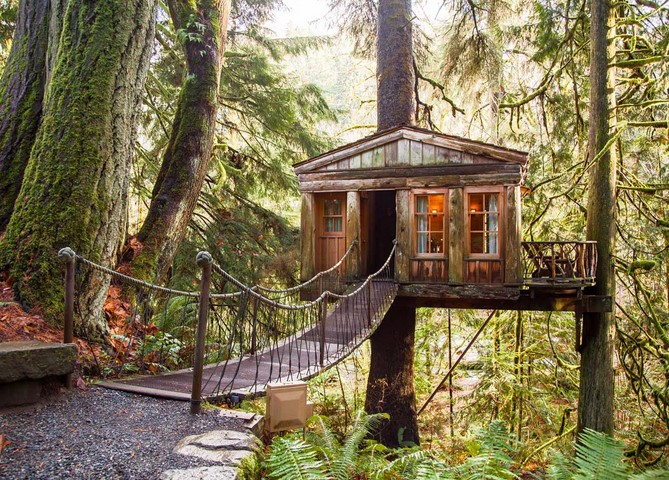
To the uninitiated, a treehouse is a wooden box nailed to a trunk. To a specialized architect, it is a masterclass in dynamic structural engineering. Unlike a house on the ground, a treehouse must account for the oscillating movement of its host.
Think of a luxury treehouse like a moored ship. Just as a ship must sway with the waves to avoid breaking apart, a high-end treehouse is often mounted on “GLZ” (Garnier Limb Z-brackets) or heavy-duty suspension cables that allow the tree to grow and move in the wind without compromising the guest’s safety. When you feel that slight sway during a storm, it’s not a flaw—it’s the building’s way of “dancing” with the tree.
Why Choose Luxury Treehouse Escapes Over a Five-Star Resort?
For the elite traveler, the appeal lies in the Total Sensory Immersive Experience. In a standard hotel, you are an observer of the view; in a treehouse, you are the view.
-
Acoustic Isolation: Being elevated naturally distances you from the “ground noise” of leaf blowers, vehicles, and other guests.
-
Biodiversity Access: Many bird species and primates are strictly arboreal. Staying in the canopy puts you at eye level with wildlife that ground-dwellers only see through binoculars.
-
Bio-Architecture: Most luxury treehouse escapes utilize sustainable materials like reclaimed teak, bamboo, and cork, which have a lower thermal mass, keeping the rooms naturally cooler than concrete structures.
Top Global Destinations for Elevated Living
If you’re ready to trade the elevator for a winding spiral staircase, these three regions are currently leading the world in luxury arbor-tourism.
1. Scandinavia: The Nordic Minimalism
Sweden’s Treehotel is the gold standard for technical innovation. From the “Mirrorcube” (which is coated in infrared film invisible to humans but visible to birds to prevent collisions) to the “UFO,” these are tech-heavy pods designed for extreme cold.
-
The Insight: Staying here in winter taught me about radiant floor heating in sub-zero canopy environments. It’s a surreal feeling to be toasty warm while looking out at a frozen pine forest from twenty feet up.
2. Southeast Asia: The Bamboo Palaces
In Bali and Thailand, “treehouses” are often sprawling, multi-story bamboo cathedrals.
-
Technical Detail: These structures often use borax-treated bamboo, which makes the organic material as durable as steel and resistant to the tropical humidity that usually rots wood in years.
3. The Pacific Northwest, USA: The Cedar Sanctuaries
For those who love the scent of pine and the roar of a wood-burning stove, the forests of Washington and Oregon offer heavy-timber escapes built into massive Douglas Firs.
Expert Advice: Navigating the Technical Realities
Even at the highest luxury levels, staying in a treehouse requires a bit of “Arbor-Etiquette” and technical awareness.
Tips Pro: The “Light Hygiene” Rule
Insects are attracted to blue-spectrum light. Most high-end treehouses use amber-tinted LED lighting to minimize the attraction of nocturnal “visitors.” When you’re in your room, try to keep the lights dim or use the “warm” settings to keep the mosquito count at zero.
Beware of “Tree-Wash” Marketing. Some resorts claim to offer treehouses but actually build concrete towers with wood siding near trees. A true luxury treehouse escape should be integrated into the tree’s structure. If the building doesn’t sway slightly in a high wind, it’s probably just a regular house on stilts.
Scannable Checklist for the Elevated Traveler
Before you book your flight, consider these technical factors to ensure your escape is as seamless as possible:
-
Payload Weight: Most treehouses have strict weight limits for luggage. Leave the heavy “checked-in” trunks at home; a 40L carry-on is the sweet spot for navigating the stairs and suspension bridges.
-
Humidity Control: In tropical regions, look for treehouses that offer dehumidification systems rather than just AC. This prevents your clothes from feeling damp in the morning.
-
Connectivity: High-altitude foliage can act as a natural Faraday cage. If you need to work, ensure the property offers Starlink or point-to-point Wi-Fi that can penetrate the canopy.
-
Accessibility: If you have knee issues, check the “Access Method.” Some use electric lifts, while others require a 50-step climb.
The Sustainable Impact of Living Above the Ground
One of the most beautiful aspects of luxury treehouse escapes is their Low Environmental Footprint. Because the building is elevated, the soil beneath remains uncompacted, allowing the root systems and local flora to thrive. Many of these projects are “non-invasive,” meaning if the treehouse were removed tomorrow, the forest would reclaim the space in months.
By choosing these escapes, you are funding the preservation of old-growth forests. Landowners are incentivized to keep ancient trees standing because they are more valuable as “luxury hosts” than as timber.
Conclusion: The Ultimate Perspective Shift
There is something ancient and primal about sleeping in the trees. It recalibrates your circadian rhythm and reminds you that we are, at our core, part of the ecosystem. Luxury treehouse escapes offer the perfect marriage of that raw, visceral connection and the refined comforts of a modern lifestyle.
You aren’t just booking a room; you’re booking a seat at nature’s most exclusive theater.
If you could wake up tomorrow in a glass cube in the Swedish pines or a bamboo palace in the jungles of Bali, which one would you choose? Have you ever stayed somewhere that felt like it was “breathing” with you? Let me know in the comments below!
Wild Paths: Jungle Trekking Escapes for Adventurers
Source:https://hiddenlemur.com
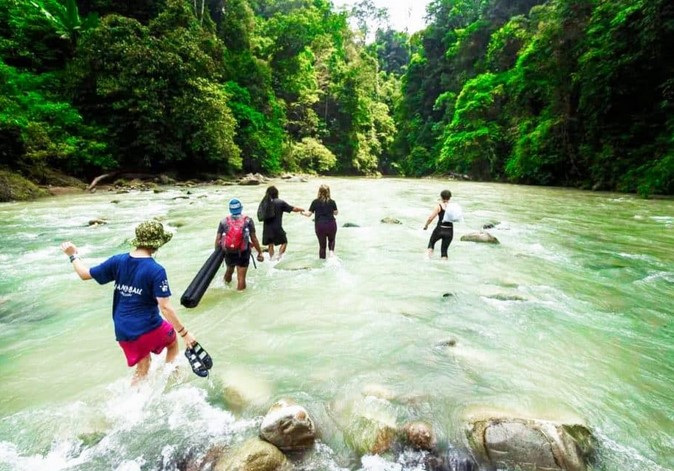
The humidity is so thick you don’t just breathe it—kamu wear it. Your shirt has been plastered to your back for six hours, and every time you stop moving, the silence of the rainforest is immediately replaced by a high-pitched hum of insects that sounds like a live power line. Suddenly, your guide stops, pointing at a patch of disturbed mud. It’s a fresh footprint, three times the size of yours, with claws that have sunk deep into the earth.
In my ten years of navigating the emerald cathedrals of Borneo, the Amazon, and Sumatra, I’ve learned that jungle trekking escapes are the ultimate test of human adaptability. While mountain trekking is a battle against gravity and thin air, the jungle is a battle against complexity. It is an environment that wants to reclaim everything—including your gear, your sense of direction, and your comfort. But for those who know how to read the “Green Wall,” it offers a level of raw, unfiltered intimacy with nature that no other landscape can match.
The “Green Wall” Paradox: Why Jungle Trekking is Different
To the uninitiated, the jungle looks like a chaotic mess of plants. To an experienced trekker, it’s a highly structured skyscraper.
Think of the jungle as a massive, organic library. Most travelers spend their time in the “Lobby” (the cleared paths near lodges), but the real stories—the rare wildlife sightings and the ancient medicinal plants—are tucked away in the “Deep Archives” of the primary forest. Unlike a mountain where you can see the summit from miles away, in the jungle, your world is often limited to the 10 feet of visibility directly in front of your face.
This sensory deprivation is why jungle trekking escapes require a different technical mindset. You aren’t looking for landmarks; you are looking for patterns.
Mastering the Technical Kit: Gear That Survives the Tropics
After a decade of watching “waterproof” boots fall apart in three days and seeing high-end electronics succumb to “internal rain” (condensation), I’ve refined a kit that prioritizes breathability over waterproofing.
-
The Cotton Trap: Never wear cotton. It’s a “death fabric” in the tropics. Once it gets wet from sweat or rain, it stays wet, leading to chafing and fungal infections. Use synthetic blends or ultra-fine merino wool that utilize moisture-wicking technology.
-
Footwear Physics: In the rainy season, I often ditch expensive Gore-Tex boots for local “Kampung Adidas” (rubber studded shoes used by Southeast Asian rangers). Why? Because once a waterproof boot gets wet from the top, it becomes a bucket. Rubber shoes drain instantly and provide the best grip on mossy logs.
-
Leech Management: If you are heading to the Paleotropics (Asia/Africa), leech socks are non-negotiable. They are tightly woven over-socks that prevent these “blood-sucking hitchhikers” from finding a gap in your armor.
Top Destinations for Jungle Trekking Escapes
If you’re ready to move from a beginner “nature walk” to a true adventurer’s trek, these three regions offer the best technical challenges.
1. Gunung Leuser National Park, Indonesia
This is one of the few places on Earth where you can still see orangutans, tigers, rhinos, and elephants in the same ecosystem.
-
The Experience: Trekking here involves navigating steep, root-choked ridges. It’s a masterclass in three-point contact movement (always having two feet and a hand, or one foot and two hands, connected to the earth).
-
Technical Detail: The humidity here often hovers at 95%. Your body cannot cool down through evaporation, so electrolyte management is more important than pure water intake.
2. The Darién Gap, Panama/Colombia
Often called the “most dangerous jungle in the world,” this is for advanced trekkers only. It is a roadless wilderness of swamps and mountains.
-
The Insight: Beyond the political complexities, the technical challenge here is the swamp navigation. You spend days with wet feet, making trench foot prevention (drying feet every night and using anti-fungal powder) a daily survival ritual.
3. Danum Valley, Malaysian Borneo
For those who want to see the “Old Guard” of the jungle. The dipterocarp trees here are among the tallest in the world, creating a majestic high canopy.
-
The Highlight: The Canopy Walkways. Walking 40 meters above the forest floor allows you to see the “Engine Room” of the jungle—the birds and primates that never descend to the ground.
Expert Advice: Navigating the Invisible Risks
The jungle is rarely dangerous because of big predators; it’s the small things that get you.
Tips Pro: The “Look Before You Grab” Rule
In a rainforest, plants have evolved incredible chemical and physical defenses. Some vines have “wait-a-minute” thorns that hook into your skin, while others are home to Fire Ants or Bullet Ants. I always tell my trekkers: Never grab a tree trunk or a vine for balance without looking at it first. One wrong move can result in a sting that feels like a gunshot.
Beware of “Deadfall.” In a primary forest, the biggest killer is often falling branches. After a heavy rain, the weight of the water can cause massive, rotting branches to snap silently. When setting up a temporary camp or taking a break, always look up. If you see “widow-makers” (hanging dead branches) above you, move your spot immediately.
Scannable Checklist for the Jungle Adventurer
To ensure your jungle trekking escapes are memorable for the right reasons, follow this technical checklist:
-
Dry Bags: Use multiple small dry bags rather than one large liner. This creates “air pockets” that can actually help your pack float if you fall during a river crossing.
-
Navigation: Carry a traditional compass alongside your GPS. The dense canopy often causes “signal drift” or total GPS blackout.
-
First Aid: Your kit must include Povidone-iodine (Betadine) and anti-histamines. In the tropics, a tiny scratch can turn into an infected ulcer in 24 hours.
-
Hydration: Aim for 4-6 liters of water a day, supplemented with high-sodium electrolyte tabs to replace what you lose in “insensible perspiration.”
The Sustainable Impact: Why Your Trek Matters
As a traveler who has seen the devastating effects of deforestation firsthand, I believe responsible jungle trekking escapes are a vital conservation tool. When you pay for a local guide and a trekking permit, you are proving to the local government that a standing forest is worth more than timber or palm oil.
Your presence supports the “Guardians of the Forest.” Many of the best guides are former poachers or loggers who now use their incredible tracking skills to protect the wildlife they once hunted. By trekking with them, you are funding the frontline of global conservation.
Conclusion: Finding the Rhythm of the Wild
Jungle trekking isn’t about “conquering” the wilderness; it’s about surrendering to it. It forces you to slow down, to listen to the shift in the cicada’s hum, and to appreciate the sheer resilience of life. It’s a place where your job title and your social media following mean nothing, but your ability to stay hydrated and keep your feet dry means everything.
The wild paths are waiting. They are muddy, they are humid, and they are completely unpredictable. And that is exactly why you should go.
Which jungle has always been on your “Must-Explore” list? Are you drawn to the misty cloud forests of the Andes or the orangutan-filled ridges of Sumatra? Share your dream expedition in the comments below—I’d love to help you chart your course!
Stages of History: Cultural Theater Tours to Discover
Source:https://performance.stageright.com
You are sitting in a stone amphitheater in Greece, the sun dipping below the Mediterranean horizon. A performer at the center of the stage drops a tiny silver coin onto a marble slab. From the very back row—150 feet away and 60 feet up—you hear the distinct clink as if it happened right next to your ear. This isn’t magic; it’s a 2,400-year-old masterpiece of acoustic engineering that modern stadiums still struggle to replicate.
Over the past decade, I’ve navigated the world not just to see landscapes, but to sit in the “living rooms” of history. Cultural theater tours are more than just watching a play; they are an immersion into the architectural and social blueprints of a civilization. From the gold-leafed grandeur of Parisian opera houses to the dusty, sun-drenched stones of Roman ruins, I’ve learned that a theater tells you more about a city’s soul than any museum ever could.
The Architecture of Emotion: Why Theater Tours Matter
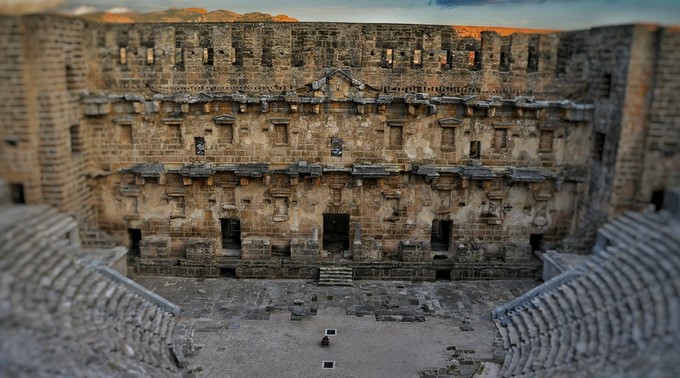
To the uninitiated, a theater is just a room with seats and a stage. But for the serious traveler, these structures are technical time capsules. When you join cultural theater tours, you are examining how humans have solved the “Distance Problem”—how to project a human voice and a human emotion to thousands of people without the aid of a microphone.
Think of an ancient theater like a satellite dish made of stone. Every curve of the seating (the theatron) and every angle of the backstage wall (the skene) was mathematically calculated to bounce sound waves back to the audience. In a world of digital noise, standing in these silent spaces offers a profound lesson in the power of the raw human voice.
Global Stages: Must-Visit Cultural Theater Tours
If you’re ready to move beyond the tourist traps, here are the regions where history is still “performing” every single day.
1. The Greco-Roman Circuit: Epidaurus and Taormina
If you want to understand the origins of drama, you must go to the Mediterranean. The Theater of Epidaurus in Greece is the gold standard for acoustics.
-
The Insight: I once visited during a rehearsal of Antigone. Watching the actors move across the orchestra (the circular performance space) made me realize that the circular design wasn’t just for sightlines; it creates a “sound vortex” that keeps the energy trapped within the bowl.
-
Technical Detail: Look for the “natural amplification” limestone seats. Studies have shown that the rows of limestone seats filter out low-frequency background noise (like the wind) while reflecting high-frequency voices.
2. The European Grandeur: Paris and Venice
Moving from stone to velvet, the Opéra Garnier in Paris or La Fenice in Venice represent the height of Baroque and Neoclassical design.
-
The Experience: We often think of these as places for the elite, but the technical innovation here was about social visibility. The “horseshoe” shape of the balconies wasn’t for the best view of the stage—it was so the wealthy could see each other.
-
LSI Context: Notice the use of proscenium arches and trapdoors; these were the “special effects” of the 19th century, allowing for elaborate set changes that signaled the dawn of modern entertainment.
3. The Eastern Tradition: Kabuki-za in Tokyo
For something completely different, cultural theater tours in Japan offer a glimpse into a world of ritualized movement.
-
The Highlight: The Hanamichi (flower path). This is a long raised platform that runs through the audience. It breaks the “fourth wall” and allows actors to enter right next to the spectators.
-
Expert Tip: Pay attention to the revolving stage (Mawari-butai). Japan was using mechanical revolving stages for rapid scene changes long before Western theaters adopted the technology.
Navigating the Technical Side: Beyond the Performance
When you book cultural theater tours, you aren’t just buying a ticket to a show; you are often gaining “Backstage Access.” Here is what you should look for to ensure you are getting a deep-dive experience:
-
The Rigging and Fly Systems: Ask to see the “fly loft.” In historic theaters, these are complex systems of ropes, pulleys, and counterweights that allow multi-ton sets to vanish in seconds.
-
The Pit: Observe the orchestra pit. In older houses, the depth of the pit is specifically engineered based on the building’s reverberation time—too shallow, and the brass instruments will drown out the singers; too deep, and the sound becomes “muddy.”
-
Seating Sightlines: Modern “tiered” seating is often superior to old “box” seating. If you are there for the history, sit in the boxes; if you are there for the performance, the Parterre (stalls) usually offers the best acoustic balance.
Expert Advice: Pro Tips for the Cultural Traveler
After ten years of “stage-hopping,” I’ve developed a few rules to help you avoid the crowds and find the authentic echoes.
Tips Pro: The “Empty Room” Protocol
Whenever possible, book a technical tour during the morning hours when the theater is empty. The acoustics change completely when the room is filled with people (who act as sound-absorbing “soft baffles”). Hearing the natural echo of an empty 2,000-seat house is a hauntingly beautiful experience that you lose once the crowd arrives.
Beware of “Renovated” ruins. Some ancient theaters have been heavily restored with modern concrete to facilitate pop concerts. While great for the local economy, this can ruin the original acoustic fingerprint of the site. Look for “Heritage-protected” sites where the original stone is still the primary surface.
Scannable Checklist for your Theater Expedition
-
Dress Code: Even if it’s an afternoon tour, many grand European houses maintain a “smart-casual” atmosphere. Avoid flip-flops to show respect to the “Ghost of the House.”
-
Optics: Bring a small pair of theater binoculars (opera glasses). Historic theaters were designed for the naked eye, but the intricate carvings on the ceiling and the detail of the costumes are worth the magnification.
-
The “Whisper” Test: If you are at an ancient site, have a partner stand in the center of the stage while you go to the top row. Have them whisper a secret. If you can hear it, you are in a masterfully engineered space.
-
Timing: Many historic theaters in Italy and Spain are closed on Mondays. Always check the seasonal schedule, as many open-air theaters only perform during the “Golden Summer” months.
The Sustainable Impact of Theater Tourism
Supporting cultural theater tours is a direct investment in Architectural Conservation. These buildings are incredibly expensive to maintain—the gilding, the upholstery, and the structural integrity of ancient stone require constant funding. By visiting, you are helping to keep these “Stages of History” from falling silent.
Furthermore, many theater tours now highlight Traditional Craftsmanship, from the costume makers who use 100-year-old techniques to the scenographers who preserve the art of hand-painted backdrops. You are supporting a living lineage of artists.
Conclusion: Finding Your Place in the Story
Theater is the only art form that requires a physical “gathering” to exist. When you stand on a stage that has seen thousands of years of human triumph and tragedy, you realize that while our technology changes, our stories remain remarkably the same. Cultural theater tours don’t just show you where people used to sit; they show you how we’ve always tried to understand ourselves.
The next time you travel, don’t just walk past that old building with the pillars. Go inside, find a seat, and listen. The stones have plenty to say.
Which historic stage has always been on your bucket list? Is it the neon-lit boards of Broadway, or the silent marble of a Greek ruin? Share your favorite theater memories in the comments—I’d love to know where your “Stage of History” began!
Snow Thrills: Winter Snowboarding Parks Around the World
Source:https://skiandsnow.co.nz
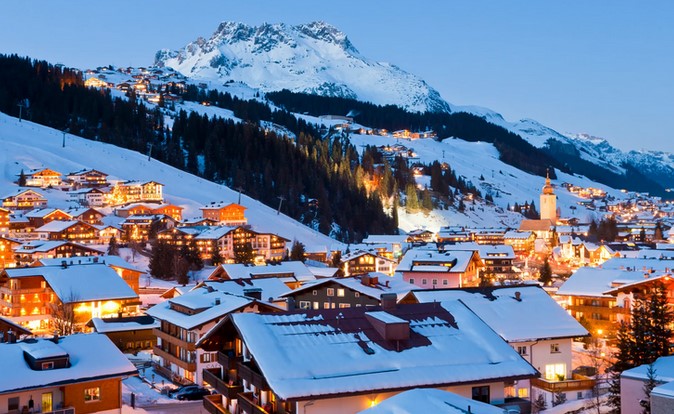
You are standing at the top of a 2,000-meter peak, the wind whistling past your helmet, and your heart thumping against your ribs like a trapped bird. You look down at the “park” below—a playground of massive icy jumps and steel rails—and suddenly, the high-quality gear you bought feels very small against the sheer scale of the mountain. Did you know that nearly 40% of intermediate snowboarders plateau because they choose parks that don’t match their technical skill level?
In my decade of chasing winters from the jagged peaks of the Swiss Alps to the legendary “Japow” of Hokkaido, I’ve learned that winter snowboarding parks are the soul of the sport. I still remember my first real “wipeout” in Laax; I had overshot a kicker because I didn’t understand the snow’s friction coefficient that morning. It’s these “insight” moments—the ones you only get after hundreds of hours on the lift—that turn a tourist into a rider.
The Anatomy of a World-Class Terrain Park
To the uninitiated, a snowboarding park looks like a chaotic collection of snow mounds. To an expert, it is a finely engineered landscape designed for progression. A park is essentially a skatepark made of frozen water, but with one major difference: the “concrete” changes its density every hour based on the sun’s position.
Think of a terrain park like a level-based video game. You don’t start at the final boss (the 60-foot Pro-Line kickers). You start in the “Tutorial” zone—the small rollers and flat boxes—where the stakes are low and the snow is soft. Understanding the “flow” of a park is the technical key to staying safe and getting better.
Understanding Park Features
-
Kickers (Jumps): These have three parts: the “Take-off,” the “Knuckle,” and the “Landing.” For beginners, the goal is to clear the knuckle and land on the down-slope.
-
Jibs (Rails and Boxes): These are the metal or plastic features you slide across. A “Box” is wider and more stable, like a training wheels version of a rail.
-
Half-pipes: A giant U-shaped channel. Dropping in requires a technical understanding of transition riding and edge control.
Top Destinations for Winter Snowboarding Parks
If you are ready to level up from “falling leaf” to carving like a pro, these are the resorts that offer the best park engineering on the planet.
1. Laax, Switzerland: The Freestyle Mecca
Laax isn’t just a resort; it’s a laboratory for snowboarding. It boasts the world’s largest permanent half-pipe and four distinct parks.
-
Why it’s for you: They have a “Beginner-friendly” park called Snowpark NoName, which is designed with “Progression” in mind. The transitions are mellow, meaning if you fall, you’re sliding, not thudding.
2. Mammoth Mountain, California: The Sunny Session
Mammoth is famous for “Unbound,” their collection of 10+ parks. Because it’s in California, the snow is often “Corny”—a technical term for soft, granular snow that is very forgiving for learners.
-
The Insight: I’ve spent weeks here just watching the pros. The technical maintenance team (the “Park Crew”) uses specialized Zaugg Pipe Shapers to ensure the walls of the pipes are laser-smooth.
3. Niseko, Japan: The Powder Park
Japan is famous for “Deep Powder,” but their winter snowboarding parks offer a unique challenge. Riding a park in Niseko feels like jumping into a giant pile of cotton balls.
-
Technical Detail: The “Japow” (Japan Powder) creates a high-friction environment. You need to wax your board with Cold-Temperature Wax to maintain enough speed to clear the jumps.
The Technical Kit: Gear for the Park
You can’t ride a park with a board designed for carving groomed trails. Well, you can, but it’s like trying to play tennis with a squash racket.
-
Twin-Tip Boards: Unlike directional boards, these are symmetrical. This allows you to ride “Switch” (backwards) after a 180-degree spin.
-
Magne-Traction Edges: For parks that get icy (especially in the US East Coast or Europe), edges with multiple contact points act like serrated steak knives, gripping the ice when a standard edge would slip.
-
Park-Specific Bindings: You want a softer “Flex” here. It allows for more “tweak” (style) in the air and absorbs the vibration of heavy landings.
Expert Advice: Navigating Park Etiquette
The most dangerous thing in winter snowboarding parks isn’t the jumps—it’s the people who don’t know the rules.
Tips Pro: The “Drop-In” Ritual
Before you go down a feature, raise your hand or shout “Dropping!” This lets the riders above you know that the “lane” is occupied. Also, never, ever stop in the “landing zone” of a jump. To the person above you, you are invisible. It’s like standing in the middle of a highway at night.
Beware of “Flat Light.” When the sky is grey, the shadows disappear, making the snow look like a flat white sheet. You won’t be able to see the “lip” of the jump or the “transition” of the landing. If you can’t see the texture of the snow, stay out of the park. Your knees will thank you.
Scannable Checklist for the Developing Rider
-
Helmets are Non-Negotiable: Modern MIPS (Multi-directional Impact Protection System) technology can reduce rotational forces on the brain during a fall.
-
Impact Shorts: These are padded shorts worn under your pants. Beginners spend 50% of their time on their tailbone; trust me, you want the extra foam.
-
Waxing: Use a “Medium-Fluoro” wax. It provides the best balance of speed and durability for park laps.
-
The “Pre-Ride, Re-Ride, Freeride” Method:
-
Pre-Ride: Inspect the features slowly.
-
Re-Ride: Ride through the park without hitting anything big to get a feel for the speed.
-
Freeride: Now you’re ready to send it.
-
The Impact of High-Altitude Progression
Snowboarding is more than a sport; it’s a lesson in Calculated Risk Management. When you finally land that first clean jump, the rush of dopamine is backed by the technical satisfaction of knowing your “Edge Angle” and “Pop Timing” were perfect.
As a blogger who has seen the industry evolve, I’m inspired by the move toward “Eco-Parks.” Many resorts now use All-Electric Groomers and sustainable snow-making technology that uses 50% less water. Your lift ticket is an investment in the future of the mountains.
Conclusion: Ready to Drop In?
The world of winter snowboarding parks is waiting for you. It’s a place where gravity is a suggestion and every fall is just a data point on your way to becoming a better rider. Whether you’re heading to the high-tech parks of Switzerland or the soft landings of Japan, the goal is the same: have fun, stay safe, and keep pushing that “Level Up” button.
What’s the biggest “mental block” stopping you from hitting the park? Is it the fear of the fall, or just not knowing which line to take? Let’s break it down in the comments—I’m here to help you clear that first kicker!
Echoes Underground: Ancient Cave Tours Worth Exploring
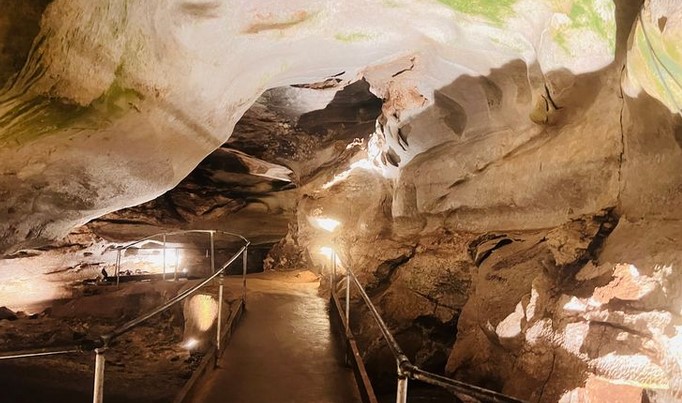 The moment the guide asks everyone to switch off their headlamps, the world doesn’t just get dark—it vanishes. In the belly of a limestone cavern, “darkness” is a physical weight that presses against your skin. You can’t see your hand an inch from your nose, but your other senses suddenly go into overdrive. You hear the rhythmic tink-tink of water minerals hitting a pool and smell the damp, metallic scent of earth that hasn’t seen the sun in a million years.
Over the past decade, I’ve crawled through narrow squeeze-ways in Southeast Asia and walked through cathedral-sized caverns in the Balkans. I’ve learned that ancient cave tours are the closest thing we have to a time machine. While a museum shows you artifacts behind glass, a cave puts you inside the very womb where human history—and geological time—was forged.
The Silent Architects: How Caves Are “Built”
To understand why these subterranean worlds are so precious, you have to realize that caves are the slowest construction projects on Earth. Most of the famous caverns we visit today are Solution Caves, primarily formed by the chemical dissolution of limestone.
Think of a cave like a giant piece of Swiss cheese being slowly carved by acidic rainwater. As rain falls through the atmosphere, it picks up carbon dioxide, becoming a weak carbonic acid. Over millions of years, this “acid rain” eats away at the bedrock, creating the voids we explore.
When you look at a stalactite (the ones hanging from the ceiling) or a stalagmite (the ones on the floor), you are looking at a geological calendar. On average, these formations grow at a rate of about one inch every 100 years. When you stand next to a five-foot pillar, you are standing next to 6,000 years of “frozen” water drops.
Top Ancient Cave Tours for the Modern Explorer
If you are ready to trade the sky for the stone, these are the regions where the subterranean world offers the most profound experiences for beginners and intermediates.
1. The Karst Landscapes of Southeast Asia
Countries like Vietnam and Laos hold some of the world’s largest and most majestic cave systems.
-
Personal Insight: I’ve found that the Phong Nha-Ke Bang National Park in Vietnam is the gold standard. While everyone wants to see Son Doong (the world’s largest), the more accessible Paradise Cave (Thien Duong) is a technical marvel of crystalline formations.
-
LSI Context: These are often River Caves, where you explore via boat, witnessing the power of fluvial erosion firsthand.
2. The Maya Underworld of Central America
For the Maya, caves weren’t just geological features; they were Xibalba, the entrance to the underworld.
-
The Experience: Exploring the Actun Tunichil Muknal (ATM) Cave in Belize was a turning point in my career. You aren’t just looking at rocks; you are wading through water to see 1,000-year-old calcified skeletons and ceramic offerings left by priests.
-
Technical Detail: The constant 100% humidity and stable temperatures in these caves act as a natural preservative for archaeological remains.
3. The Mammoth systems of North America
Mammoth Cave in Kentucky is the longest cave system known to man, with over 400 miles of surveyed passages.
-
The Highlight: This is the best place for beginners to learn about speleogenesis (the origin and development of caves). The sheer scale allows for “walking tours” that feel more like wandering through an underground city than a cramped tunnel.
Navigating the Technical Side: Gear and Safety
Even on “easy” ancient cave tours, the environment is technically demanding. Most caves maintain a constant temperature—usually the average annual temperature of the location outside. This means a cave in the jungle might be a humid 25°C, while a cave in the mountains could be a bone-chilling 10°C.
-
Footwear Physics: You need shoes with multidirectional lugs. Cave floors are often covered in “cave milk” (a pasty carbonate deposit) or slick mud. Standard sneakers will turn into ice skates.
-
Lumen Logic: If you are doing a semi-wild tour, don’t rely on your phone flashlight. You need a dedicated headlamp with at least 300 lumens and a wide beam pattern to appreciate the scale of the chambers.
-
The “Rule of Three”: In the caving community, we never go in without three independent light sources. If one fails, you have a backup. If the backup fails, you have a “life-saver” to get you out.
Expert Advice: Professional Etiquette Underground
Caves are some of the most fragile ecosystems on the planet. One careless move can destroy 10,000 years of growth.
Tips Pro: The “Hands-Off” Mandate
Never touch a formation. Your skin produces natural oils that act as a “waterproof sealant” on the rock. Once you touch a growing stalactite, the water can no longer deposit its minerals there, and that formation effectively “dies.” It stops growing forever.
Beware of White-Nose Syndrome. This is a fungal disease killing millions of bats. If you are a frequent cave-goer, you must decontaminate your gear between different cave systems. Most reputable tours will provide a foot bath at the entrance. Do not skip it; you could be carrying a biological death sentence for the local bat population on your boots.
Scannable Checklist for your Cave Expedition
-
Clothing: Wear synthetic “wicking” layers. Cotton becomes heavy and cold when wet.
-
Health: If you suffer from claustrophobia, start with “Show Caves”—these have electric lighting and paved walkways to help you acclimate.
-
Photography: Use a “Long Exposure” setting and a tripod if allowed. Modern smartphones struggle with the “High Dynamic Range” needed to capture the deep shadows and bright limestone highlights.
-
Biodiversity: Keep an eye out for Troglobites—animals that have evolved to live entirely in the dark, often losing their eyes and pigmentation.
The Impact of Subterranean Tourism
As we explore these ancient cave tours, we are funding the protection of vital aquifers. Most of our world’s fresh water is stored in karst landscapes. By supporting ethical cave tourism, you are encouraging local governments to protect these areas from quarrying and pollution.
A cave is a “closed system.” Everything you bring in—even the lint from your clothes or the carbon dioxide from your breath—affects the delicate balance. Choosing tours with limited group sizes is the best way to ensure these “echoes” last for another million years.
Conclusion: The Call of the Deep
There is a profound humility in walking through a passage that was carved when mammoths still roamed the earth. Ancient cave tours remind us that we are just a blink in the eye of geological time. They offer a rare chance to disconnect from the digital world and reconnect with the raw, silent power of the planet.
The next time you have the chance to go underground, take it. Turn off the light, hold your breath, and listen to the Earth breathe.
Which subterranean wonder is on your bucket list? Are you drawn to the crystal cathedrals of Vietnam or the haunted sacrificial chambers of Belize? Share your thoughts below—I’d love to help you find your perfect path into the deep!