


Living Traditions: Mountain Village Treks Across Cultures
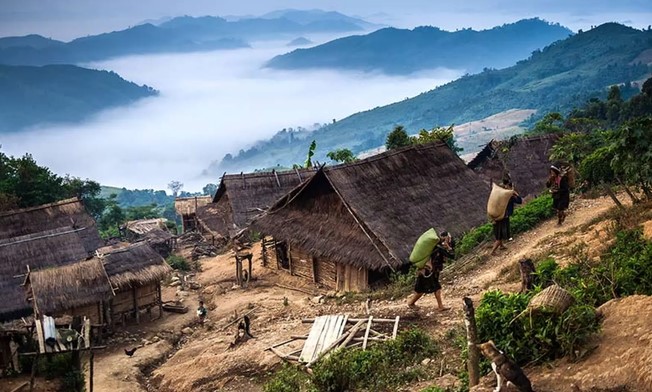
Source:https://discoverlaos.today
Picture this: You are standing at an altitude of 11,000 feet, your chest heaving from a steep six-hour ascent up a stone staircase carved into the side of a cliff. The temperature is plunging rapidly as the sun dips behind snow-capped peaks. Your knees feel like jelly, and your phone screen displays that dreaded message: No Service. But just as exhaustion threatens to take over, you round a sharp bend in the trail and spot wood-smoke curling gently from the chimney of a stone teahouse, where a local village host greets you with a steaming mug of hot butter tea and a warm smile.
If you think mountain trekking is only about standing on high-altitude summits with an ice axe, think again.
Having spent over a decade boots-on-the-ground navigating isolated alpine corridors across Nepal, Peru, and the Swiss Alps, I can tell you that the true heart of high-altitude travel isn’t the barren mountain peaks—it’s the centuries-old communities clinging to their slopes. Engaging in mountain village treks offers an intimate window into living traditions, ancient agricultural practices, and indigenous hospitality that roads and tour buses simply can never reach.
For beginner and intermediate trekkers, embarking on a cultural village trek requires a thoughtful balance between physical preparation, cultural intelligence, and technical trail know-how. Let’s dive deep into how you can plan, respect, and execute an unforgettable journey through high-altitude settlements worldwide.
The Alpine Ecosystem: Why Cultural Treks Beat Summit Pushes
Many novice hikers make the mistake of treating high-altitude trekking like a purely athletic race to the top. But rushing past high-mountain hamlets means missing out on the rich cultural fabric that makes these remote areas thrive.
Think of cultural mountain village treks like walking through a living, breathing historical museum without glass display cases: every stone terrace represents generations of soil management, every prayer flag tells a story of weather patterns, and every home is a masterclass in vernacular architecture suited for extreme environments.
+--------------------------+------------------------------------+------------------------------------+
| Trekking Dimension       | Summit-Focused Expedition          | Cultural Mountain Village Trek     |
+--------------------------+------------------------------------+------------------------------------+
| Primary Objective        | Reaching a specific peak elevation | Experiencing local lifeways & trails|
| Physical Strain          | High / Extreme Technical           | Moderate to High / Endurance       |
| Accommodation Style      | High-Altitude Tents / Bivouac      | Local Teahouses, Lodges, Homestays |
| Cultural Immersion       | Minimal (Barren terrain)           | Exceptional (Direct interaction)   |
| Economic Local Impact    | Concentrated on climbing staff     | Broadly distributed to villages    |
+--------------------------+------------------------------------+------------------------------------+
Choosing a village-to-village route allows you to travel lighter, support local mountain economies directly, and acclimatize far more naturally than on rapid ascent trips.
Top 3 Iconic Mountain Village Trekking Destinations
If you are eager to experience living cultural traditions firsthand, these three legendary mountain corridors offer the ideal blend of striking landscapes and welcoming local communities:
                      [ GLOBAL VILLAGE CORRIDORS ]
                     /             |              \
             Annapurna Circuit  Sacred Valley    Valais Alpine Way
             (Nepal Himalayas)   (Andes, Peru)    (Swiss Alps)
1. The Annapurna & Langtang Regions – Nepal
-
The Culture: Gurung, Tamang, and Sherpa communities steeped in Tibetan Buddhism.
-
The Experience: Trekking between high-altitude teahouses, passing mani walls (sacred stone tablets carved with mantras), prayer wheels powered by glacier streams, and centuries-old monasteries (gompas).
-
My Insight: Don’t just treat teahouses like cheap hotels. Sit in the communal dining hall, learn a few phrases of the local dialect, and watch how meals like dal bhat are prepared over wood fires—it is where the real cross-cultural magic happens.
2. The Lares & Sacred Valley Routes – Peru
-
The Culture: Quechua-speaking descendants of the Inca Empire.
-
The Experience: Walking ancient cobblestone paths connecting high Andean farming hamlets, where locals still wear vibrant hand-woven ponchos and tend herds of llamas and alpacas at 12,000 feet.
-
The Highlight: Observing traditional backstrap loom weaving techniques using natural plant and insect dyes (like cochineal) preserved for over a millennium.
3. The Via Alpina & Valais Hamlets – Switzerland
-
The Culture: Traditional Walser and Swiss alpine farming traditions.
-
The Experience: Hiking through lush pastures linked by sun-blackened timber chalets, where summer transhumance (moving livestock to high mountain pastures) is still practiced to produce artisanal alpine cheeses.
High-Altitude Physics & Acclimatization Math
Transitioning between mountain villages requires respecting atmospheric pressure shifts. As elevation increases, effective oxygen availability per breath drops because atmospheric pressure decreases—not because the percentage of oxygen in the air changes.
[ SEA LEVEL (100% Effective Oxygen) ] ➔ [ 8,000 FT (76% Effective Oxygen) ] ➔ [ 12,000 FT (64% Effective Oxygen) ]
To avoid Acute Mountain Sickness (AMS) while trekking between high-altitude villages, follow these non-negotiable physiological guidelines:
-
The “Climb High, Sleep Low” Principle: Hike to higher elevations during the day to stimulate red blood cell production, then descend slightly to sleep at lower village elevations.
-
Ascent Rate Limits: Once above $8,000\text{ feet}\ (2,400\text{ meters})$, limit your net sleeping elevation gain to no more than $1,000\text{–}1,500\text{ feet}\ (300\text{–}500\text{ meters})$ per 24-hour cycle.
-
Hydration Balance: In dry mountain air, hyperventilation causes rapid fluid loss. Drink $3.5\text{ to }4.5\text{ Liters}$ of fluid daily, mixing in electrolyte solutions to prevent altitude-induced headaches.
Gear & Technical Trail Essentials for Village-to-Village Hikes
Because village-to-village trekking relies on local lodges or homestays for food and shelter, you can eliminate heavy camping gear like stoves and tents. However, your personal gear must handle dramatic mountain weather shifts.
1. Footwear & Joint Protection
-
Sturdy Ankle-Support Boots: Mountain trails connecting villages often consist of loose scree, uneven cobblestones, or mud. Choose waterproof leather or synthetic boots with deep lug soles.
-
Trekking Poles: Descending 3,000 feet of steep stone steps can place up to four times your body weight in pressure on your knee joints. Adjustable aluminum or carbon-fiber trekking poles reduce knee impact by up to 20%.
2. The Layering System
-
Base Layer: Merino wool or synthetic tops (never cotton!) that wick sweat away during strenuous ascents.
-
Insulating Layer: A lightweight fleece or mid-loft down jacket for chilled evenings inside unheated village lodges.
-
Outer Shell: Windproof and waterproof hard-shell jacket (Gore-Tex or equivalent) to block sudden alpine downpours or snow flurries.
Cultural Etiquette & Hidden Warnings
Stepping into remote mountain hamlets means entering delicate cultural ecosystems. How you behave directly impacts the sustainability of these communities.
🚨 Hidden Warning: Cultural Faux Pas & Environmental Stewardship
3 Pro-Tips for an Authentic Village Experience
-
Hire Local Guides and Porters: Always book through local community agencies. Fairly paying mountain guides and porters ensures that your travel dollars directly benefit village families rather than foreign booking corporations.
-
Pack Small Cash Denominations: High-altitude villages do not have ATMs or credit card machines. Carry plenty of low-denomination local currency stored in a waterproof pouch inside your daypack.
-
Embrace the Pace of Mountain Time: Power outages, slow meal preparation, and sudden weather delays are part of the alpine rhythm. Approach every challenge with patience, flexibility, and good humor.
Ready to Walk the High Trails?
Taking on mountain village treks is far more than a physical exercise—it is a transformative cultural bridge. As you trek from one stone hamlet to the next, stepping over ancient footbridges and sharing stories around wood stoves, you’ll discover that the mountain air doesn’t just clear your lungs; it clears your perspective.
Respect the terrain, honor the traditions of the communities that call these high places home, and let every trail lead you deeper into the heart of our shared human story.
Over to You! Have you ever completed a village-to-village trek, or is there a high-altitude mountain region calling your name? Drop a comment below with your favorite trail memory or your biggest travel question—let’s keep the adventure conversation going!