


Culture Under the Sky: Open-Air Theaters Worth Visiting
 The sun was dipping below the horizon, painting the limestone cliffs of Cornwall in hues of burnt orange and deep violet, as the first violin note cut through the sound of crashing Atlantic waves. I wasn’t in a plush, climate-controlled opera house in London; I was perched on a granite ledge at the Minack Theatre, clutching a blanket and a thermos of tea. It occurred to me then that while indoor theaters are built to mimic life, cultural open-air theaters force life to harmonize with the elements.
For over a decade, I’ve tracked down the world’s most spectacular outdoor stages, from ancient Roman amphitheaters to modern architectural marvels. If you’ve ever felt that traditional theater is a bit too “stiff” or claustrophobic, you’re not alone. The magic of an open-air performance lies in its unpredictability—the way a passing breeze or a rising moon becomes an unscripted part of the set.
Why Cultural Open-Air Theaters Offer a Superior Sensory Experience
Think of an indoor theater like a studio recording: it’s polished, controlled, and isolated. An open-air theater, by contrast, is a live outdoor concert. You have the “ambient track” of nature, the shifting lighting of the sunset, and a spatial acoustics profile that no speaker system can perfectly replicate.
Visiting cultural open-air theaters is an exercise in “Environmental Immersion.” These venues were often designed using ancient principles of natural acoustics. In places like Epidaurus, a whisper on stage can be heard in the back row, 60 meters away, thanks to the technical precision of the limestone seating which acts as a natural filter for low-frequency background noise while reflecting high-frequency voices.
The Technical Brilliance of Ancient and Modern Outdoor Stages
To the untrained eye, an outdoor theater is just a pile of stones or a wooden deck. To an architect or a seasoned traveler, it is a masterclass in passive acoustic engineering and sightline optimization.
1. Natural Amplification and Wave Reflection
Ancient Greeks were the pioneers of this. They understood that the semi-circular shape of the theatron allowed sound waves to bounce off the hard surfaces and travel upward without losing clarity. When you visit these sites, you are witnessing the “analog” version of a modern soundboard.
2. Scenography and Borrowed Scenery
In Japanese garden design, there is a concept called Shakkei, or “borrowed scenery.” Many cultural open-air theaters use this same technical principle. The stage isn’t just the wooden planks; it’s the mountain range, the ocean, or the city skyline behind it. This creates a depth of field that makes the performance feel three-dimensional and infinite.
3. Thermal Management for the Audience
Modern outdoor theaters often use bioclimatic design to keep audiences comfortable. This includes strategic orientation to catch evening breezes or using stone materials that retain the day’s heat to keep viewers warm during a chilly night performance.
Global Destinations for the Open-Air Connoisseur
After 10 years on the road, I’ve found that these three venues represent the absolute pinnacle of the outdoor theatrical experience.
The Minack Theatre (Cornwall, UK)
Carved into a granite cliff overlooking Porthcurno Bay, this theater is a testament to human grit. It was built largely by hand by Rowena Cade in the 1930s.
-
The Personal Insight: I’ve watched Shakespeare here during a light drizzle, and surprisingly, the rain made the tragedy of King Lear feel significantly more visceral. The technical challenge here is the salt spray; if you’re in the front rows, your skin will literally taste like the ocean by intermission.
Odeon of Herodes Atticus (Athens, Greece)
Located on the southern slope of the Acropolis, this is arguably the most prestigious stage in the world.
-
The Experience: Watching a performance here is like stepping into a time machine. The stone walls, originally built in 161 AD, provide a reverberation time that is perfect for operatic vocals and orchestral crescendos.
Santa Fe Opera House (New Mexico, USA)
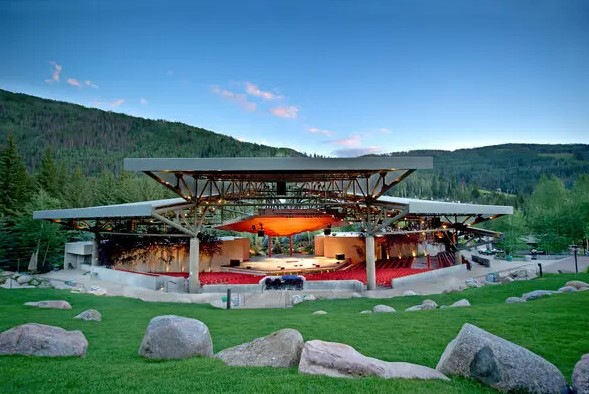
This is a modern marvel. The roof is designed to look like a ship’s sails, but its technical purpose is to act as a wind deflector and an acoustic canopy. Because the sides are open, you can watch lightning storms in the distance while listening to Puccini—a truly “electrifying” experience.
💡 Pro Tip: The “Cushion and Layer” Strategy
Here is a secret from the pros: The stone is your enemy. Ancient theaters were built for durability, not gluteal comfort. Many venues rent cushions, but they are often thin and overpriced. I always carry a self-inflating seat pad. Furthermore, even in the desert, temperatures drop rapidly once the sun sets. Always pack one more layer than you think you need—sitting still for two hours makes your body temperature drop much faster than when you’re walking.
Essential Gear for the Outdoor Spectator
When you attend cultural open-air theaters, you aren’t just an audience member; you are an expeditionist. You need gear that handles the technical transition from day to night.
-
Binoculars (Compact 8×25): Even with great sightlines, seeing the subtle facial expressions of an actor from 40 rows up is a game-changer.
-
DEET-Free Repellent: Mosquitoes love a captive audience. Use a Picaridin-based spray; it’s odorless and won’t ruin the experience for the person sitting next to you.
-
Silent Snacks: Nothing ruins a dramatic soliloquy like the “crinkle” of a plastic chip bag. Pack soft foods—grapes, cheeses, or sandwiches wrapped in cloth—to ensure you aren’t the source of noise pollution.
Navigating the Logistics: Tickets and Timing
Because these venues are seasonal, the competition for tickets is fierce.
-
The “Restricted View” Hack: In many ancient theaters, “restricted view” tickets are sold because a pillar or a slight angle blocks a tiny portion of the stage. For an intermediate traveler, these are the best value—the acoustic quality remains identical, and you save up to 50% on the entry fee.
-
Arrival Windows: For cultural open-air theaters, the “show” starts 60 minutes before the actors arrive. This is when the light changes and the atmosphere builds. Arriving early isn’t just about finding your seat; it’s about watching the architecture interact with the twilight.
The Hidden Warning: Weather and Cancellations
Unlike a movie theater, an outdoor venue is at the mercy of the gods.
Understand the “Rain Policy.” Most theaters will perform through a light mist but will stop for lightning or heavy downpours. I’ve seen tourists demand refunds five minutes into a storm, unaware that most outdoor theaters have a “No Refund After 30 Minutes” policy. Expert Advice: Check the local radar on an app like Windy before you leave your hotel. If a storm cell is moving in, bring a high-quality poncho—umbrellas are strictly forbidden because they block the view of everyone behind you.
Scannable Checklist for Your First Visit
-
Check the Footwear: Many of these theaters involve steep, uneven stone steps. Leave the heels at home; wear high-traction flats or sandals.
-
Hydration: Open-air doesn’t mean cool. If the sun is still up, the stone seats act like an oven. Bring a liter of water per person.
-
Research the Libretto: If you’re seeing an opera in an ancient language, read the summary beforehand. Without subtitles on a screen, you’ll rely entirely on the actors’ physicality.
-
Sun Protection: For matinee shows, you are a sitting duck. A wide-brimmed hat is essential, but be prepared to take it off once the performance starts.
Conclusion: A Performance Without Walls
Attending a show in one of the world’s great cultural open-air theaters is a reminder that art wasn’t always something we “consumed” in a dark box. It was a communal event that included the stars, the wind, and the earth. When the final curtain call happens and you look up to see the real constellations above the stage, you realize that no amount of digital special effects can compete with the raw beauty of a performance under the open sky.
Have you ever watched a play under the stars, or is an ancient amphitheater still on your bucket list? Which venue’s “natural scenery” would you most love to see? Let’s talk about your favorite outdoor memories in the comments below!