


Stages of History: Cultural Theater Tours to Discover
Source:https://performance.stageright.com
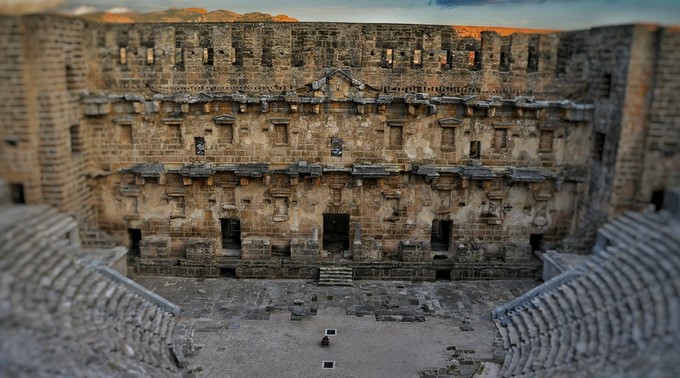
You are sitting in a stone amphitheater in Greece, the sun dipping below the Mediterranean horizon. A performer at the center of the stage drops a tiny silver coin onto a marble slab. From the very back row—150 feet away and 60 feet up—you hear the distinct clink as if it happened right next to your ear. This isn’t magic; it’s a 2,400-year-old masterpiece of acoustic engineering that modern stadiums still struggle to replicate.
Over the past decade, I’ve navigated the world not just to see landscapes, but to sit in the “living rooms” of history. Cultural theater tours are more than just watching a play; they are an immersion into the architectural and social blueprints of a civilization. From the gold-leafed grandeur of Parisian opera houses to the dusty, sun-drenched stones of Roman ruins, I’ve learned that a theater tells you more about a city’s soul than any museum ever could.
The Architecture of Emotion: Why Theater Tours Matter
To the uninitiated, a theater is just a room with seats and a stage. But for the serious traveler, these structures are technical time capsules. When you join cultural theater tours, you are examining how humans have solved the “Distance Problem”—how to project a human voice and a human emotion to thousands of people without the aid of a microphone.
Think of an ancient theater like a satellite dish made of stone. Every curve of the seating (the theatron) and every angle of the backstage wall (the skene) was mathematically calculated to bounce sound waves back to the audience. In a world of digital noise, standing in these silent spaces offers a profound lesson in the power of the raw human voice.
Global Stages: Must-Visit Cultural Theater Tours
If you’re ready to move beyond the tourist traps, here are the regions where history is still “performing” every single day.
1. The Greco-Roman Circuit: Epidaurus and Taormina
If you want to understand the origins of drama, you must go to the Mediterranean. The Theater of Epidaurus in Greece is the gold standard for acoustics.
-
The Insight: I once visited during a rehearsal of Antigone. Watching the actors move across the orchestra (the circular performance space) made me realize that the circular design wasn’t just for sightlines; it creates a “sound vortex” that keeps the energy trapped within the bowl.
-
Technical Detail: Look for the “natural amplification” limestone seats. Studies have shown that the rows of limestone seats filter out low-frequency background noise (like the wind) while reflecting high-frequency voices.
2. The European Grandeur: Paris and Venice
Moving from stone to velvet, the Opéra Garnier in Paris or La Fenice in Venice represent the height of Baroque and Neoclassical design.
-
The Experience: We often think of these as places for the elite, but the technical innovation here was about social visibility. The “horseshoe” shape of the balconies wasn’t for the best view of the stage—it was so the wealthy could see each other.
-
LSI Context: Notice the use of proscenium arches and trapdoors; these were the “special effects” of the 19th century, allowing for elaborate set changes that signaled the dawn of modern entertainment.
3. The Eastern Tradition: Kabuki-za in Tokyo
For something completely different, cultural theater tours in Japan offer a glimpse into a world of ritualized movement.
-
The Highlight: The Hanamichi (flower path). This is a long raised platform that runs through the audience. It breaks the “fourth wall” and allows actors to enter right next to the spectators.
-
Expert Tip: Pay attention to the revolving stage (Mawari-butai). Japan was using mechanical revolving stages for rapid scene changes long before Western theaters adopted the technology.
Navigating the Technical Side: Beyond the Performance
When you book cultural theater tours, you aren’t just buying a ticket to a show; you are often gaining “Backstage Access.” Here is what you should look for to ensure you are getting a deep-dive experience:
-
The Rigging and Fly Systems: Ask to see the “fly loft.” In historic theaters, these are complex systems of ropes, pulleys, and counterweights that allow multi-ton sets to vanish in seconds.
-
The Pit: Observe the orchestra pit. In older houses, the depth of the pit is specifically engineered based on the building’s reverberation time—too shallow, and the brass instruments will drown out the singers; too deep, and the sound becomes “muddy.”
-
Seating Sightlines: Modern “tiered” seating is often superior to old “box” seating. If you are there for the history, sit in the boxes; if you are there for the performance, the Parterre (stalls) usually offers the best acoustic balance.
Expert Advice: Pro Tips for the Cultural Traveler
After ten years of “stage-hopping,” I’ve developed a few rules to help you avoid the crowds and find the authentic echoes.
Tips Pro: The “Empty Room” Protocol
Whenever possible, book a technical tour during the morning hours when the theater is empty. The acoustics change completely when the room is filled with people (who act as sound-absorbing “soft baffles”). Hearing the natural echo of an empty 2,000-seat house is a hauntingly beautiful experience that you lose once the crowd arrives.
Beware of “Renovated” ruins. Some ancient theaters have been heavily restored with modern concrete to facilitate pop concerts. While great for the local economy, this can ruin the original acoustic fingerprint of the site. Look for “Heritage-protected” sites where the original stone is still the primary surface.
Scannable Checklist for your Theater Expedition
-
Dress Code: Even if it’s an afternoon tour, many grand European houses maintain a “smart-casual” atmosphere. Avoid flip-flops to show respect to the “Ghost of the House.”
-
Optics: Bring a small pair of theater binoculars (opera glasses). Historic theaters were designed for the naked eye, but the intricate carvings on the ceiling and the detail of the costumes are worth the magnification.
-
The “Whisper” Test: If you are at an ancient site, have a partner stand in the center of the stage while you go to the top row. Have them whisper a secret. If you can hear it, you are in a masterfully engineered space.
-
Timing: Many historic theaters in Italy and Spain are closed on Mondays. Always check the seasonal schedule, as many open-air theaters only perform during the “Golden Summer” months.
The Sustainable Impact of Theater Tourism
Supporting cultural theater tours is a direct investment in Architectural Conservation. These buildings are incredibly expensive to maintain—the gilding, the upholstery, and the structural integrity of ancient stone require constant funding. By visiting, you are helping to keep these “Stages of History” from falling silent.
Furthermore, many theater tours now highlight Traditional Craftsmanship, from the costume makers who use 100-year-old techniques to the scenographers who preserve the art of hand-painted backdrops. You are supporting a living lineage of artists.
Conclusion: Finding Your Place in the Story
Theater is the only art form that requires a physical “gathering” to exist. When you stand on a stage that has seen thousands of years of human triumph and tragedy, you realize that while our technology changes, our stories remain remarkably the same. Cultural theater tours don’t just show you where people used to sit; they show you how we’ve always tried to understand ourselves.
The next time you travel, don’t just walk past that old building with the pillars. Go inside, find a seat, and listen. The stones have plenty to say.
Which historic stage has always been on your bucket list? Is it the neon-lit boards of Broadway, or the silent marble of a Greek ruin? Share your favorite theater memories in the comments—I’d love to know where your “Stage of History” began!