


Northern Magic: Polar Cruises to Witness the Lights
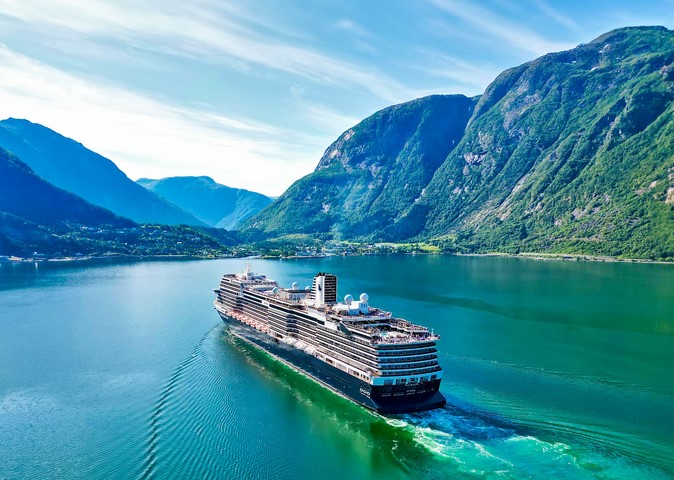
Source:https://img.cruisecritic.net
You are standing on a vibrating steel deck in the middle of the Greenland Sea, the temperature has plummeted to -15°C, and your eyelashes are starting to frost over. Suddenly, a faint ghostly ribbon of lime-green tea-smoke begins to dance across the pitch-black sky, expanding into a violet-edged curtain that shimmers with the intensity of a thousand neon signs. Most travelers try to catch this from a hotel window, only to be thwarted by light pollution or a single stubborn cloud. But on the move, in the deep Arctic, the odds shift dramatically in your favor.
In my decade of navigating the world’s most frozen latitudes, I’ve learned that polar northern lights cruises are the ultimate “cheat code” for seeing the Aurora Borealis. While land-based hunters are stuck in one coordinate, a ship is a mobile observatory that can outrun localized weather systems. I still remember my first night off the coast of Svalbard; the captain made a sudden 10-degree course correction just to bypass a fog bank, revealing a sky so clear it felt like I could touch the stars. That is the tactical advantage of being at sea.
The Science of the Chase: Why the Ocean Wins
To understand why a cruise is superior, you have to understand the “Cloud Problem.” The Aurora happens 100km above the Earth, but clouds hang much lower. If you are on land and it’s cloudy, your night is over. On a ship, the captain uses real-time satellite imagery to find “holes” in the cloud cover.
Think of it like fishing in a massive lake. If you sit on the pier (land), you have to wait for the fish to come to you. If you are in a boat (cruise), you can drive to where the fish are biting. Polar northern lights cruises essentially turn a static waiting game into an active pursuit.
Understanding the KP-Index and Solar Cycles
When you’re on board, you’ll hear the expedition leaders talking about the KP-Index. This is a scale from 0 to 9 that measures geomagnetic activity.
-
KP 1-3: Quiet activity; you need to be far north (like the Arctic Circle) to see anything.
-
KP 5+: A geomagnetic storm; the lights can drop further south and become incredibly vibrant.
-
Solar Maximum: We are currently approaching a peak in the 11-year solar cycle, meaning the next few seasons will offer the most intense displays in over a decade.
Navigating the Technical Logistics of a Polar Voyage
Choosing the right ship is a technical decision that dictates your comfort and your success rate. For beginners and intermediate travelers, there are two main types of vessels to consider.
1. The Expedition Vessel (Ice-Class)
These are smaller, rugged ships built to crunch through “pancake ice” and reach remote fjords.
-
The Insight: These ships have a shallower draft, allowing them to get closer to the coast where the water is calmer—perfect for long-exposure photography.
-
The Technical Edge: Look for a ship with a PC6 Ice Class rating. This ensures the hull can handle the pressure of Arctic winter conditions safely.
2. The Luxury Coastal Express
Larger ships, like those navigating the Norwegian coast, offer more stability and amenities.
-
Personal Observation: I’ve found that these ships are better for “Aurora Beginners” because they have dedicated Northern Lights Alarms in every cabin. You can sleep in a warm bed, and the ship will wake you up the second the sensors detect activity.
Technical Gear: How to Survive the Arctic Night
Standard winter gear won’t cut it when you are standing on a moving deck with a wind chill factor that can make -10°C feel like -25°C.
-
Vapor Management: You need a three-layer system. A moisture-wicking base (Merino wool), a heavy insulating mid-layer (down or thick fleece), and a Gore-Tex outer shell that is 100% windproof.
-
The “Tripod Tangle”: If you want to photograph the lights, a standard tripod on a moving ship is a challenge. You need a fast lens with a wide aperture (f/2.8 or lower) and a camera that handles High ISO without too much noise.
-
LSI Tip: Use Lithium-ion batteries. Standard alkaline batteries will die in minutes in the Arctic cold. Keep your spares inside your inner jacket pocket to keep them warm with your body heat.
Expert Advice: Tips for the High-Latitude Traveler
After years of “Aurora hunting,” I’ve developed a few professional secrets that you won’t find in the brochures.
Tips Pro: The “Aft-Deck” Secret
Most people crowd the bow (the front) of the ship when the lights appear. Don’t do that. The bow is the windiest and coldest part of the ship. Head to the Aft-Deck (the back). It’s usually shielded from the wind by the ship’s superstructure, and the vibration is often lower, which helps keep your camera steady for that perfect shot.
Beware of “Night Blindness.” If you spend time in the brightly lit lounge and then run outside, your eyes will take 20 minutes to adjust to the dark. You’ll miss the subtle “faint” starts of the Aurora. Always wear red-tinted glasses or hang out in the dimmest part of the deck to keep your scotopic vision (night vision) sharp.
Scannable Checklist for your Polar Cruise
-
Itinerary: Choose a “Round-trip” or a “Northbound” route. Staying above the 66th parallel (the Arctic Circle) for more than 5 nights gives you a 90% statistical chance of a sighting.
-
Footwear: You need “Baffin” style boots or specialized Arctic boots. Standard leather boots will freeze, and your toes will lose circulation within 30 minutes.
-
Optics: Bring 8×42 binoculars. While you can’t see the Aurora better with them, they are essential for spotting Whales and Polar Bears during the limited daylight hours.
-
Photography: Turn off your flash! It won’t reach the sky, and you will ruin the night vision of everyone on deck.
The Sustainable Impact of Polar Cruising
As an advocate for the environment, I must highlight that the Arctic is a “Sentinel” for climate change. Modern polar northern lights cruises are moving toward Hybrid-Electric Propulsion and strict “No-Waste” policies.
When you book, ask if the ship uses Marine Gas Oil (MGO) instead of Heavy Fuel Oil. MGO burns cleaner and reduces the “Black Carbon” deposits on Arctic ice, which helps slow down the melting process. Your choice of ship can be a vote for a cleaner Arctic.
Conclusion: The Ultimate Light Show
There is no experience on Earth quite like watching the sky catch fire while you are surrounded by the silence of the Arctic Ocean. Polar northern lights cruises take the guesswork out of the equation, providing you with a front-row seat to the greatest show in the universe.
It’s cold, it’s remote, and it requires a bit of technical preparation—but the moment those green ribbons start to swirl above the mast, you’ll realize that every bit of effort was worth it.
Have you ever felt the “Arctic pull,” or are you worried about the cold keeping you inside? If you could pick your Aurora companion—a professional photographer or a marine biologist—who would you want by your side on the deck? Let’s chat in the comments!